
Culver City Resident Lookup Coverage
Every good one-person search begins with the right custodian. A parcel ties an owner to land, but it cannot prove who sleeps there. A voter verifier confirms one person's status, not a public roll. Court records contribute party names and dated events. Vital records are governed by California's authorized and informational copy rules. They establish life events and family ties. Business, license, probate, and unclaimed-property records add affiliations or useful clues. No single official residents list exists for Culver City. So treat a strong result as an evidence chain built from at least two independent records.
| Record | What It Confirms | Where to Search | Access |
|---|---|---|---|
| Assessor parcel | Owner-to-parcel link, situs, tax clues | LA County Assessor Portal | Free address or AIN search; owner-name access limited |
| Recorded deed | Grantor, grantee, date, document number, legal description | LA County RR/CC | Appointment, mail, counter or copy request |
| Voter status | One person's registration status at a matching residence | LA County VRStatus | Four matching fields; not a public roll |
| Court index | Party, case number, type, filing events and hearings | LA Superior Court Case Access | Public-case limits; paid name search and copy rules |
| Vital record | Event, date, place and relationships where permitted | RR/CC or California CDPH | Authorized or informational copy rules |
| Business or license | Public affiliation, status, address and discipline | bizfile or DCA search | Free basic searches; board limits vary |
| Probate file | Decedent, petitioner, heirs or devisees when public | Los Angeles Superior Court | Public index and file channels; sealed material excluded |
| Unclaimed property | Name, reported city and reporting holder | California State Controller | Free association clue, not current residence proof |
Match the tool to what you already hold. If an address or case number is in hand, start with the parcel or court index. If the name is the strongest lead, begin with a business, professional, or probate record. Street-wide questions call for a different approach. Move to the Culver City street directory process instead of stretching a one-person lookup into a household roster.
Note: An official record can confirm a narrow fact without proving that the named person lives at the address today.
Normalize a Culver City Resident Name
Spelling is not identity. Name matching collapses when a searcher forgets that. Keep the middle name or initial, the suffix, a former surname, hyphenation, and likely OCR variants. Write down the exact form each source uses. A directory may print a surname before initials, a court may use a full legal name, and a business filing may name an entity or trust rather than a household.
Anchor on stable combinations instead of a name alone. Approximate age, event dates, a spouse or associate, a business name, a parcel or legal description, filing location, and chronology all narrow the field. A court party named Alex Lee is not automatically the Alex Lee in a Culver City parcel's history. And when a filed document shows an address, treat it as a dated clue rather than a claim about where someone lives now.
Culver City Court Lookup Modes
Ordinary state trial matters in Culver City belong to the Superior Court of California. That is the County of Los Angeles court. Its Public Access Online Services page updates daily. Coverage includes Unlimited Civil, Probate, and Family Law from 1983. Limited Civil starts from 1991. Small Claims starts from 1992. Older files travel through the court's archive and clerk channels. Federal matters are different. They sit with the U.S. District Court for the Central District of California, where PACER supplies a separate docket trail.
| Search mode or field | Required | What it does | Important limit |
|---|---|---|---|
| Enter your case number | Yes in case or calendar mode | Buttons are “ACCESS CASE” and “ACCESS CALENDAR” | Best when a number is already known |
| Party name | Yes for the paid name route | Civil, family, probate and small-claims party search | Exact subfields are gated by guest, account and payment flow |
| Defendant name | Yes for the paid criminal route | Searches for a criminal case number | Online criminal documents are not offered |
| Filing courthouse | Conditional | Narrows some limited-jurisdiction case searches | May be needed on the case-summary path |
| Case number by party or defendant | Optional mode | Switches from a known number to a paid name-to-number search | Not the same as free bulk browsing |
A routine public result can carry real weight. It may show the case number, litigant, case category, filing date, filing courthouse, register-of-actions events, future hearings, and the count of imaged civil documents available. The court cautions that the web result is not the official record. Civil images may appear online. Criminal and family-law document images generally stay off the web even when the docket data itself is reachable.
Note: A case index entry is a lead; the clerk's file and a certified copy control when the detail matters.
PACER is the federal route. The site covers the separate docket trail a Culver City name hits when it appears in a Central District case.
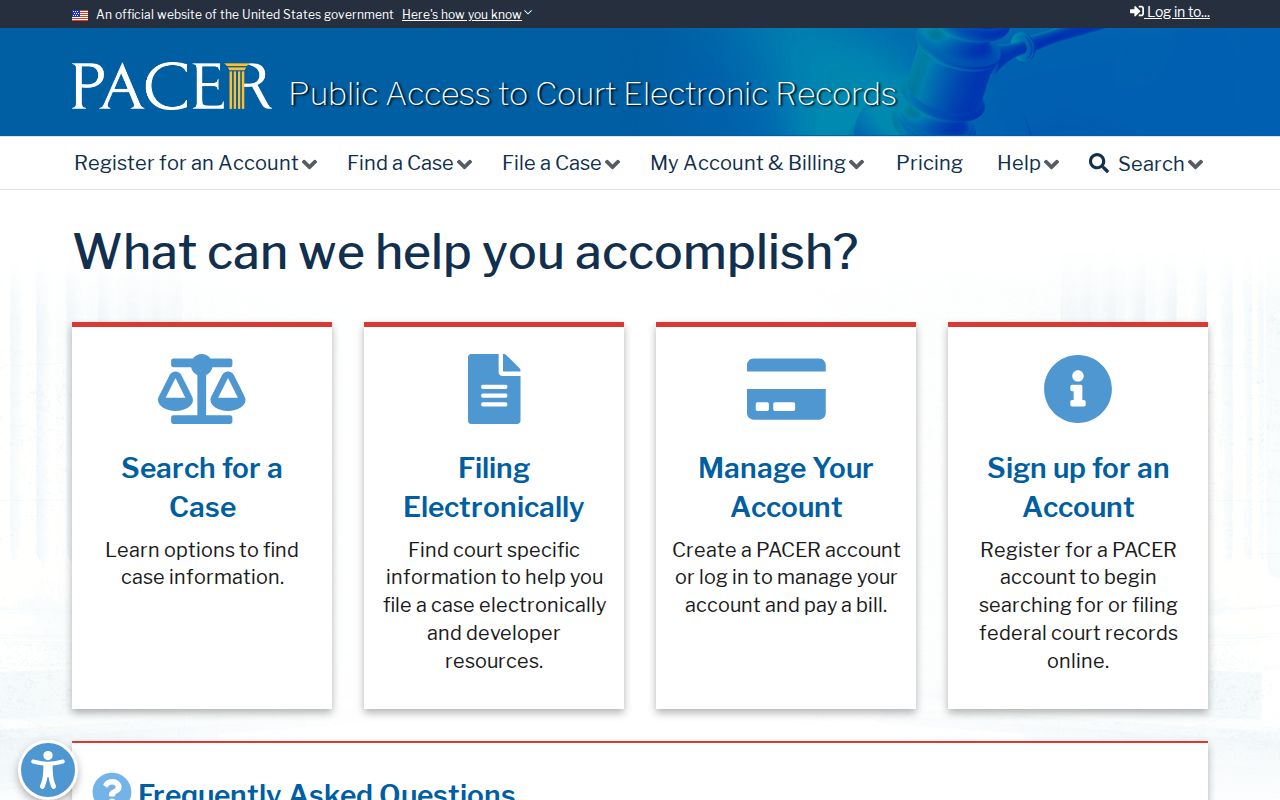
Read PACER results by case number, party role, and docket date. A filed address can mislead. It may be counsel's office, a former address, or a redacted location, so give it independent support before relying on it.
Verify One Culver City Resident
Verification is a sequence. One hit never settles it. Start with a lawful fact already in hand, then put one narrow question to each custodian, keeping an owner record, a court party, and a voter entry from collapsing into a single unsupported profile.
- Anchor the name to a known address, parcel, case number or dated event. The Assessor uses a ten-digit AIN or address, while RR/CC deed research needs a person name and recording year.
- Run the Los Angeles court party or defendant mode with the normalized name. Save the case number, filing location and date before reading any similar-name result as a match.
- Compare a second source, such as a public vital index, probate event, professional license, business filing or historical directory entry. Look for the same chronology and relationship.
- Order a certified copy only when the custodian and copy type fit the purpose. Keep the document number, case number or AIN with the result so a later correction goes to the source.
- Docket
- The court's dated register of filings, events, hearings and case activity. It is not the same as every document in the file.
- Index versus image
- An index is a search record or pointer. An image is a scanned filing or instrument, and access can be limited or charged separately.
- Certified copy
- A custodian-attested reproduction that can carry legal proof value. An informational copy may show the event without proving the requester's eligibility to use it as identity evidence.
Culver City Vital Record Copies
California has no simple closure rule for births and deaths. Health and Safety Code section 103526 splits the field in two. One path is the identity-valid authorized certified copy. The other is a watermarked informational certified copy. An eligible requester who supplies the sworn identity statement may obtain an authorized birth, death, or public-marriage copy. Another requester can generally receive an informational copy with signatures redacted where required. Confidential-marriage copies stay limited to a spouse or someone allowed by statute or court order. Adoption originals remain sealed under separate procedures.
| Record | Custodian and coverage | Copy rule | 2026 CDPH fee |
|---|---|---|---|
| Birth | LA RR/CC for county events; CDPH July 1905 to present | Informational broadly available; authorized requires eligibility and sworn or notarized statement | $31 |
| Death | LA RR/CC for county events; CDPH July 1905 to present | Informational or authorized; next of kin and specified agents may qualify | $26 |
| Public marriage | RR/CC; CDPH 1905 to 1999, 2001, 2008 to 2025 | Informational or authorized copy rules apply | $19 |
| Confidential marriage | Los Angeles County Clerk only | Generally the two parties, with court or statutory exceptions | County fee |
| Dissolution certificate | CDPH certificate of record, 1962 to June 1984; decree at Superior Court | Certificate lists parties, filing date, county and case number, not the decree | $18 |
The California Department of Public Health Vital Records fee schedule covers more than standard birth and death copies. A fetal-death copy costs $23. A stillbirth copy runs $28. A search may come up empty. CDPH keeps the payment as a search fee. It returns a Certificate of No Public Record instead. Pay by U.S.-bank check or money order made out to CDPH Vital Records; cash is not accepted. For a Culver City birth, death, or marriage that happened recently, the county office is often the better first stop. Local clerks may hold current and prior-year material before the state receives its transmission.
The VS 111 birth application asks you to choose Authorized or Informational. You must supply the registrant's name, the city or county, and an exact or approximate birth date. It also wants each parent's first, middle, current last, and last-at-birth names. Applicant details follow: mailing address, phone, email, reason, agency, and case or identification information. An authorized copy raises the stakes. It requires the sworn relationship statement and a notary certificate. The sworn-statement requirements are laid out in CDPH's authorized-copy instructions. VS 113A handles public marriage with much the same copy and eligibility fields. It adds the county of license or event and each person's names. One gap matters here. CDPH holds no public marriage records for 2000 or for 2002 through 2007. The county Recorder is the right channel for Culver City requests in those years.
Culver City Voter Lookup Limits
LA County's voter verifier answers one person's question, not a city directory's. It confirms your own status. All four fields are mandatory. Last Name takes letters only. Birthdate must follow the mm/dd/yyyy form. House Number and ZIP Code both take digits alone. Help sits at 800-815-2666, option 2. A match confirms registration and related election details, while a failed match can point to a typo, a changed record, or a protected registration rather than nonregistration.
The statewide voter file is a different animal. Elections Code sections 2188 and 2194, Government Code section 7924.000, and 2 CCR section 19001 and following restrict full-file access to approved election, scholarly, journalistic, political, or governmental purposes. A statewide file application costs $100. A specific-voter request runs $30 per record, capped at $100, for no more than ten named voters, and requires full name, date of birth, county, and residence address. Stated processing time is 7 to 14 business days.
Applicants must also supply contact details for themselves and any beneficiary, the organization or committee type, the exact statutory purpose, credentials where relevant, a security plan, file types, shipping details, photo ID, and a penalty-of-perjury signature. Delivery comes by wet-signature in person, mail, or courier. Email and fax are not used. Approved files may include registration data, residence and mailing addresses, precinct, party preference, status, and election date, method, and participation history. Vote choices never appear. Driver-license or California ID data, SSN last four, unique identifiers, signatures, protected voters, and 16- or 17-year-old preregistrants are all excluded. A "specific voter record" request cannot be stretched to pull everyone matching a street or ZIP criterion, so the residents directory uses of a street directory simply are not available through this channel.
Note: A failed voter match may reflect a typo, a changed record, or a protected registration, not nonregistration.
Culver City Custody Lookup Checks
Custody lookup tools answer one narrow question: where a person stands right now. The Los Angeles County Sheriff's Department runs an Inmate Information Center. It can return booking or arrest details, bail, court date and location, release information, holds, and visits for anyone currently in custody. Two phone numbers appear for it. These are 213-473-6002 in the manual and 213-473-6100 in a directory. Confirm contacts on the live official page before calling.
The CDCR Incarcerated Person Locator takes a name or a CDCR number. It can display age, race or ethnicity, birthplace, last legal-residence county, commitment or admission details, facility, and release information. Help is available at 916-445-6713, Monday through Friday, 8:00 a.m. to 4:30 p.m. The federal BOP search works differently. It splits into Find by Number and Find by Name tabs with fields for number type, register number, first and last name, optional middle name, race, age, and sex. A result reading "Released" or "Not in BOP Custody" does not rule out some other custody or supervision status.
California Megan's Law publishes statutory offender information through a dynamic official portal that opens with a use warning. It is not a general resident directory. LASD investigative-report requests go through Records or Public Services channels. Appointments run Monday through Thursday from 8:00 a.m. to 5:00 p.m. Published contacts are Public Services at 562-345-4441 and Records Bureau at 562-345-4426.
The LASD search capture shows why a custody result should be read as a current-status record. It is not proof of a person's full history.
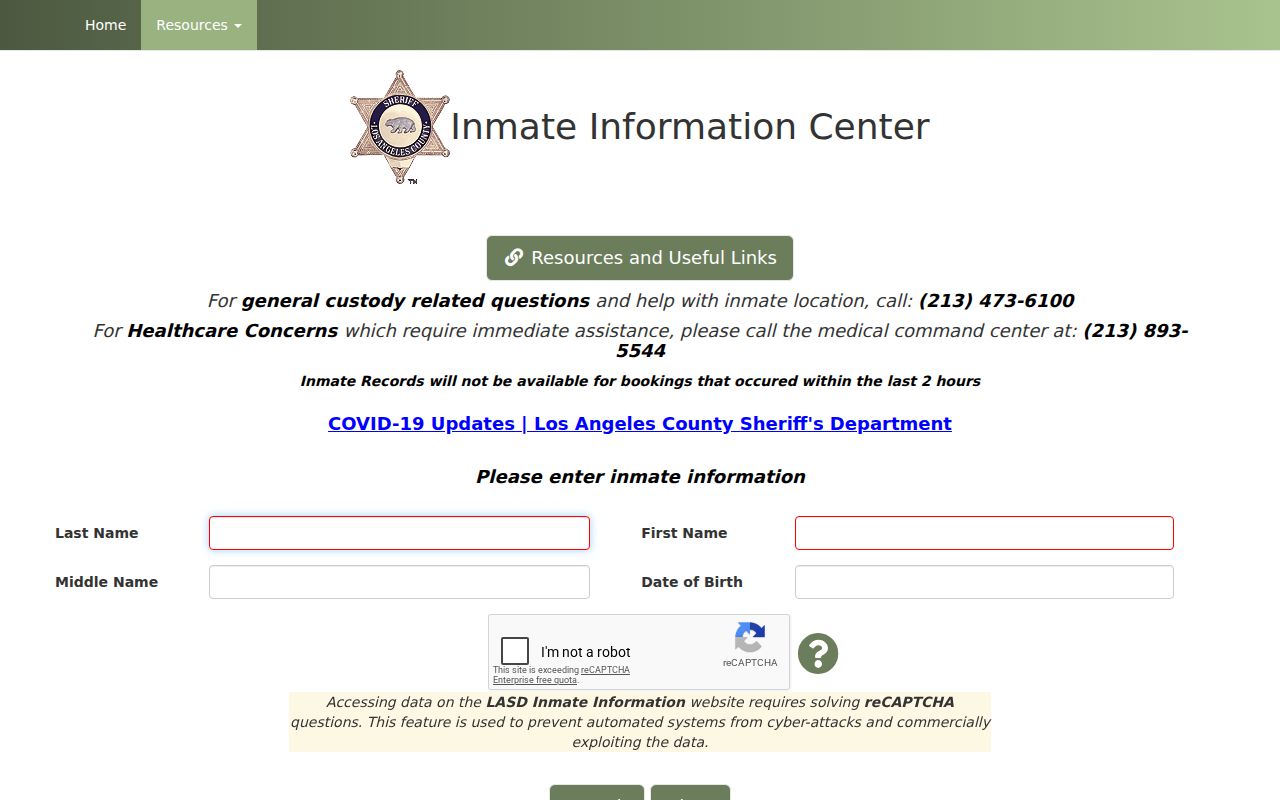
Booking, bail, and release fields are time-bound. Treat them as a snapshot. When a record matters, save the search date and confirm the result with LASD directly. The Megan's Law portal is a separate registry surface for statutory public data.
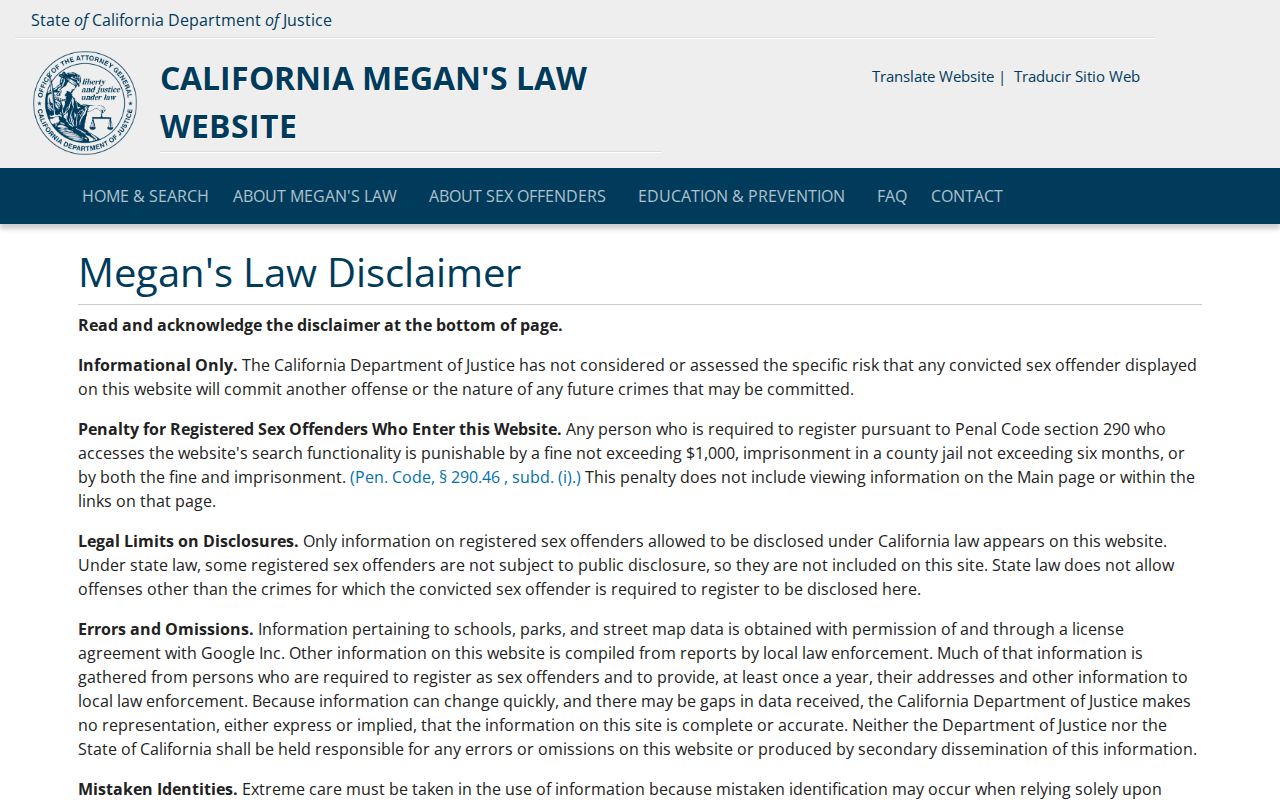
Registry entries carry their own warning and scope. Read them narrowly. Nothing in the registry supports a broader claim about a person's residence, conduct, or current status beyond what the official page displays.
Culver City Business Lookup Clues
Two Culver City residents can share one name. Business ties often separate them. The California Secretary of State's bizfile searches an entity name or number. It returns entity type, status, agent, principal or mailing address, filed officers or managers and filing history. Basic search is free. Many documents open without payment, and the system reports up to 500 closest results. An account is needed for some amendments, Statements of Information and certificates. Either an agent or business address is not a home address.
The Department of Consumer Affairs adds professional licensing clues. Its Basic search covers Boards and Bureaus, License Type, License Number, Business Name, first and last name and Registry Number. Advanced search adds up to ten license types, cities or counties, status fields, public records, discipline and documents. Board participation differs, though. California's separate official systems cover some excluded programs. Local records help too. A Culver City business tax certificate, Planning or Building Safety record can tie an operator to a site. Call the Business Resource Center at 310-253-5765, Building Safety at 310-253-5800 or Business License at 310-253-5870.
Unclaimed property is a lighter clue. The State Controller returns an owner name, reported city and reporting entity. A match does not prove current residence. Pair it with chronology and a second official source. Never treat a commercial compilation as stronger than the originating filing.
Culver City Resident Reconnection Paths
Different people questions call for different evidence. Heir work starts with a public probate case. Petitions and notices name heirs and counsel, so compare them against obituary and cemetery material. Probate is the official bridge between a deceased resident, an address and the people handling an estate. It is not a shortcut to private details.
For a former classmate, start with the yearbooks and telephone books the Culver City Historical Society keeps. The society actively solicits junior- and senior-high yearbooks and phone books from any decade. Add a current professional or business listing only if one exists. When a modern question turns historical, the Culver City city directory collections add the Library of Congress 1935 to 1945 telephone run. LAPL's wider city and reverse-directory span is there too.
Birth-parent searches belong on California's official adoption-information and court or CDSS pathways. They do not belong on attempts to defeat sealed files. Business owners need more than one record. Pair SOS entity history with county fictitious-business-name filings. Then add the city business-license record. Wrong data has a custodian. An ownership change generally follows a recorded deed. A court correction goes through the case clerk. Voter changes run through county registration. Business statements get corrected through SOS filings, so return each error to the office that keeps the record.
Culver City Resident Lookup Limits
Some Culver City residents need shielded records. The Safe at Home program, under Government Code sections 6205 through 6216, protects eligible survivors of domestic violence, stalking, sexual assault, child abduction, elder or dependent-adult abuse and human trafficking. Participants get a designated mailing address, mail forwarding and agent-for-service protection, and may register as confidential voters. Agencies generally accept that address. A documented statutory need with safeguards is the exception. Government Code section 6209.5 also allows substituting the designated address on some real-property instruments. The protection reduces exposure but is not absolute, because a property bought in a participant's own name can still surface through a legal description.
Privacy law adds another layer. The California Consumer Privacy Act, as amended by the California Privacy Rights Act, gives covered consumers rights to know, delete and correct certain information, limit sensitive-information use and opt out of sale or sharing, subject to exceptions. The California Privacy Protection Agency's DROP process centralizes requests to registered data brokers. A broker deletion does not erase a government record. Deeds, dockets and assessments stay on file. Submit opt-outs cautiously and keep confirmations. Check later for name variants, since spellings drift across systems.
Lawful use. A Culver City resident search is for personal, lawful research. Do not use records to stalk, harass, intimidate or harm anyone; respect sealed, protected and confidential records.