
Sources for Culver City Previous Residents
The backward trail for Culver City previous residents uses different records for ownership, occupancy, and family context. County deeds anchor a parcel in time. Directories and census schedules add household names. Permits date building work, while probate and obituaries can close a life or estate trail. The coverage table keeps those roles separate and shows why a single name search rarely answers an address question.
| Source | Years It Covers | Where Held | What It Shows |
|---|---|---|---|
| Recorded deeds and index | 1850/1851-present | RR/CC Norwalk; copies through other channels | Grantor, grantee, dates, document number, legal description |
| Assessor parcel and city GIS | Current data | County portal and Culver City ArcGIS | AIN, situs, owner or mailing fields where visible, building clues |
| LAPL city and business directories | 1873-1970 | LAPL ResCarta and Central Library | Named people, occupations, businesses, addresses |
| LAPL street and reverse directories | 1906, 1927, 1956-1987 | LAPL digital collection | Address-to-occupant snapshots, with community gaps |
| Culver City telephone run | Jan. 1935-Jun. 1945 | Library of Congress | Subscribers, addresses, exchanges, business lines |
| Federal census | 1790-1950 released; local geography varies | NARA, libraries, and access copies | Household members, ages, relationships, occupations |
| City permits | Portal launched 2024; older start year unpublished | Culver City Accela and CPRA | Alterations, applicants, contractors, owners, dates |
| Probate and obituaries | No complete local index verified | LA Superior Court and newspapers | Heirs, estates, death notices, relationship clues |
Start with the source that fits the question. A current parcel needs the Assessor and city GIS. A deed chain needs the RR/CC name and year index. A past household needs a reverse directory and census pairing. Family or estate work can then move to probate, an obituary, or a local archive. Each step should preserve the date, source, and limit attached to the result.
Culver City Resident History Starts with AIN
The parcel is the stable starting point for Culver City previous residents. The Los Angeles County Assessor portal offers Basic Search, Legal Search, and Map Search by address or ten-digit Assessor Identification Number. Record the AIN, situs, use, building facts, sale dates, exemption clues, and legal-description or tract information before looking for a person. The regular county parcel page omits the owner and mailing address, so ownership details may require an Assessor office inquiry using the AIN or complete address.
Culver City's official county-derived ArcGIS parcel layer currently exposes separate situs and mailing fields, first and second owner fields, sales, building data, zoning, hazards, exemptions, and legal-description lines. That observation was made on August 16, 2026, and may change. Confirm the parcel with the city boundary and JURISD='CC'; a Culver City postal line alone does not prove that the parcel is inside the incorporated city.
Tracing Culver City Deed History
The Los Angeles County Registrar-Recorder/County Clerk, or RR/CC, holds the recorded instruments that turn a parcel into an ownership chain. Its alphabetical grantor and grantee index is organized by person or entity name and recording year. There is no unrestricted public Internet index and no street-address search, so the AIN and current owner are preparation, not the deed search itself.
- Search the Assessor by situs and save the ten-digit AIN, legal clues, current building facts, and current owner from an allowed inquiry or visible city GIS field.
- At the RR/CC Norwalk office, search the likely current owner as grantee in the acquisition year and record the document number and date.
- Read the deed's grantor, grantee, recording information, and legal description. Make the grantor the next prior-owner candidate.
- Search that prior party as grantee in earlier years, keeping the same legal description or parcel lineage to avoid a same-name error.
- Continue through the 1957 and 1958 floor split, then work back toward the 1850/1851 beginning of the published coverage.
- Add directory, census, permit, obituary, and probate evidence because a title chain names owners, not every household.
- Grantor
- The person or entity transferring an interest in the recorded instrument.
- Grantee
- The person or entity receiving that interest.
- Chain of title
- A linked sequence of recorded transfers for the same parcel or legal description.
- Legal description
- The formal land wording used in a deed, such as a tract, lot, or parcel reference; it is more stable than a changed street label.
- Criss-cross directory
- A street-order listing that starts with an address and points to a named person or business.
- Enumeration district
- The census area assigned to an enumerator; its boundary may not match a modern Culver City street or parcel.
The chain is strongest when each deed's legal description, recording date, and party names agree. A document copy is evidence of the instrument; it does not by itself prove that a named owner lived at the property.
Norwalk Index Years for Culver City
RR/CC pages describe real-estate records from 1851, while copy-request pages describe 1850 to the present. Preserve that one-year difference as 1850/1851-present. At Norwalk, 1851-1957 material is reviewed on the lower level and 1958-present material on the second floor. Appointments are required, and related pages describe booking availability two or three weeks ahead, so confirm the live appointment rule.
The Los Angeles County RR/CC records hub is the source for the county access route used in a Culver City previous-resident search.
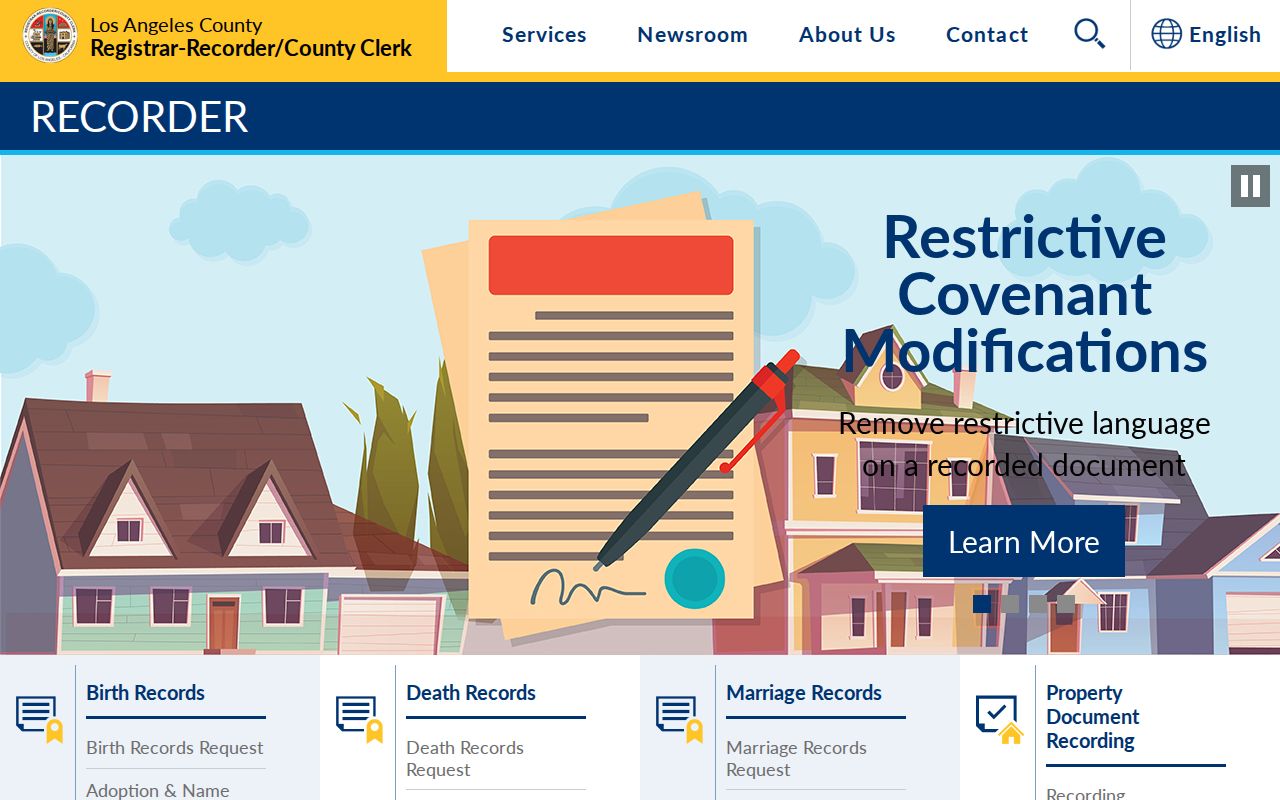
Norwalk headquarters is 12400 Imperial Highway, Norwalk, California 90650, with the RR/CC real-estate records line at 800-201-8999. The nearer LAX/Courthouse branch at 11701 South La Cienega Boulevard, sixth floor, issues copies for 1982-present. It does not replace Norwalk for historical name and year index work. Mail requests go to RR/CC Real Estate Records, P.O. Box 1130, Norwalk, CA 90651-1130, and need the document title, listed names, recording year or years, and payment. Fax requests add delivery and card details. There are no telephone orders.
Published fees include $6 for the first page of a certified copy, $3 for each added certified page, $5 for the first page of a plain copy, $3 for each added plain page, and $0.50 per name per year for a search with a $1 minimum. UPS and card fees are separate. The online LexisNexis order route processes within 20 working days but does not expose the index.
Culver City Directories Meet Census
Owners are only one layer of past residents. LAPL city directories, street or reverse directories, and the Library of Congress Culver City-Palms run can place a household at an address even when no one in the home owned it. The collections are described in the Culver City city directory record trail. LAPL's digital range is 1875-1987 overall, with reverse-directory examples from 1906, 1927, and 1956-1987. The verified LOC phone run covers January 1935 through June 1945.
National Archives census guidance explains the public release schedule used to pair directory years with household schedules.
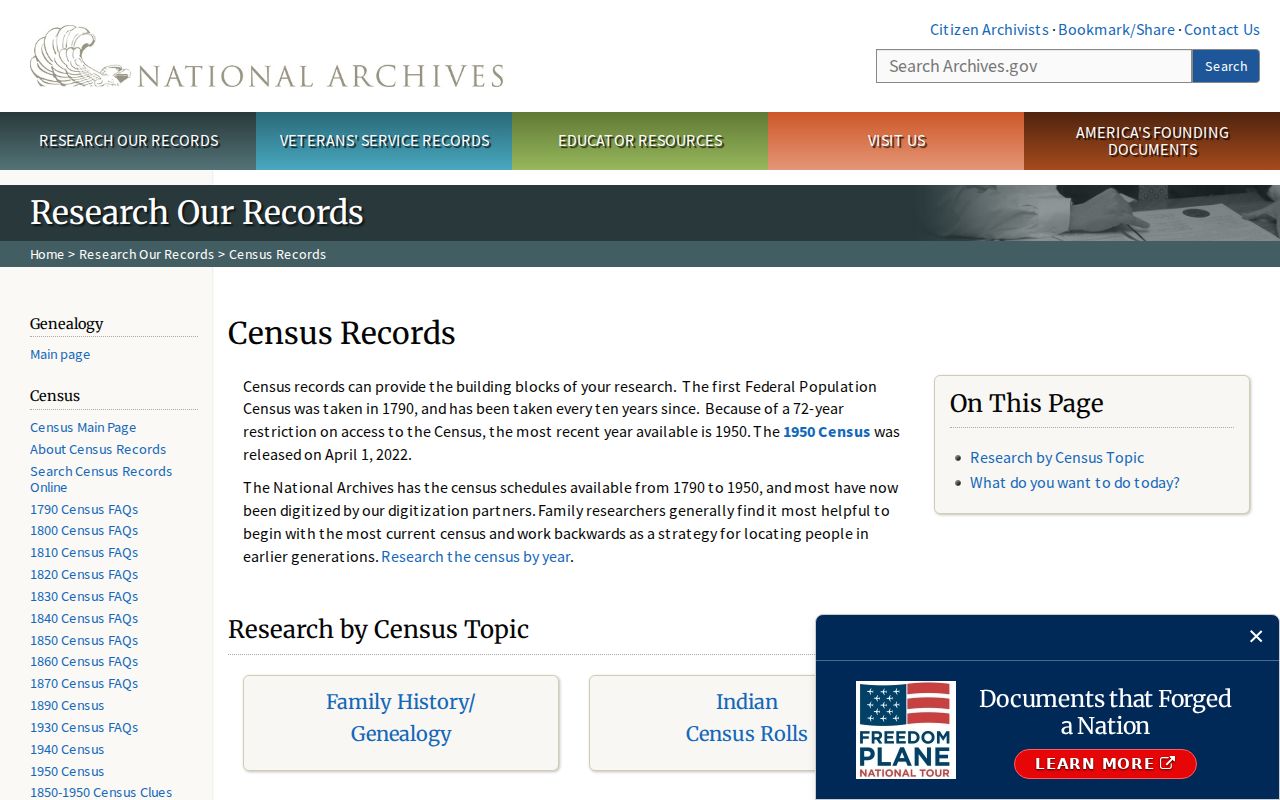
The census adds age, relationship, and household structure, but its enumeration geography may not match a modern street line. Keep the original address, locality, and enumeration context with each result.
- Find the address in a reverse directory and note every surname, initial,
hhouseholder mark, orrresidence mark. - Search the next and prior edition, trying Culver City, Palms, and broader Los Angeles headings.
- Pair the 1935-1945 phone run with the 1940 census, then use the 1950 census for the latest released household snapshot.
- Compare names and relationships, not just a matching street number, because addresses and abbreviations can shift.
- Use deeds for ownership dates and permits for physical change, then mark any occupant conclusion as corroborated or unresolved.
Culver City Permits Date Change
Culver City's 24/7 online permit portal launched November 18, 2024 for Building, Planning, Engineering, Fire, and Cannabis services. An account is required for the application workflow. A unique address match can populate the parcel number and owner field, while a recent ownership change uses a Change of Ownership checkbox and an uploaded grant deed. Building, Mechanical, Electrical, Plumbing, Demo, and Solar are separate record types. Completed applications receive a permit record number under My Records.
The Culver City permit application instructions describe the address and document workflow. Completeness review generally takes two to three business days. A permit record can show an applicant, contractor, owner, work description, status, inspection, and date, but it dates construction or alteration rather than a household's arrival.
Older hard-copy records may not yet be visible. In 2024-2025, the city approved up to $79,420 for Current Planning file digitization, amended a building and final-plan agreement to an aggregate $342,887.50, and budgeted $75,000 for planning scans. A portal miss should therefore be followed by a city public-records request or counter inquiry, not treated as proof that no permit exists.
The county public-records request route is another fallback when a past-address question crosses from city permit files into county-held records.
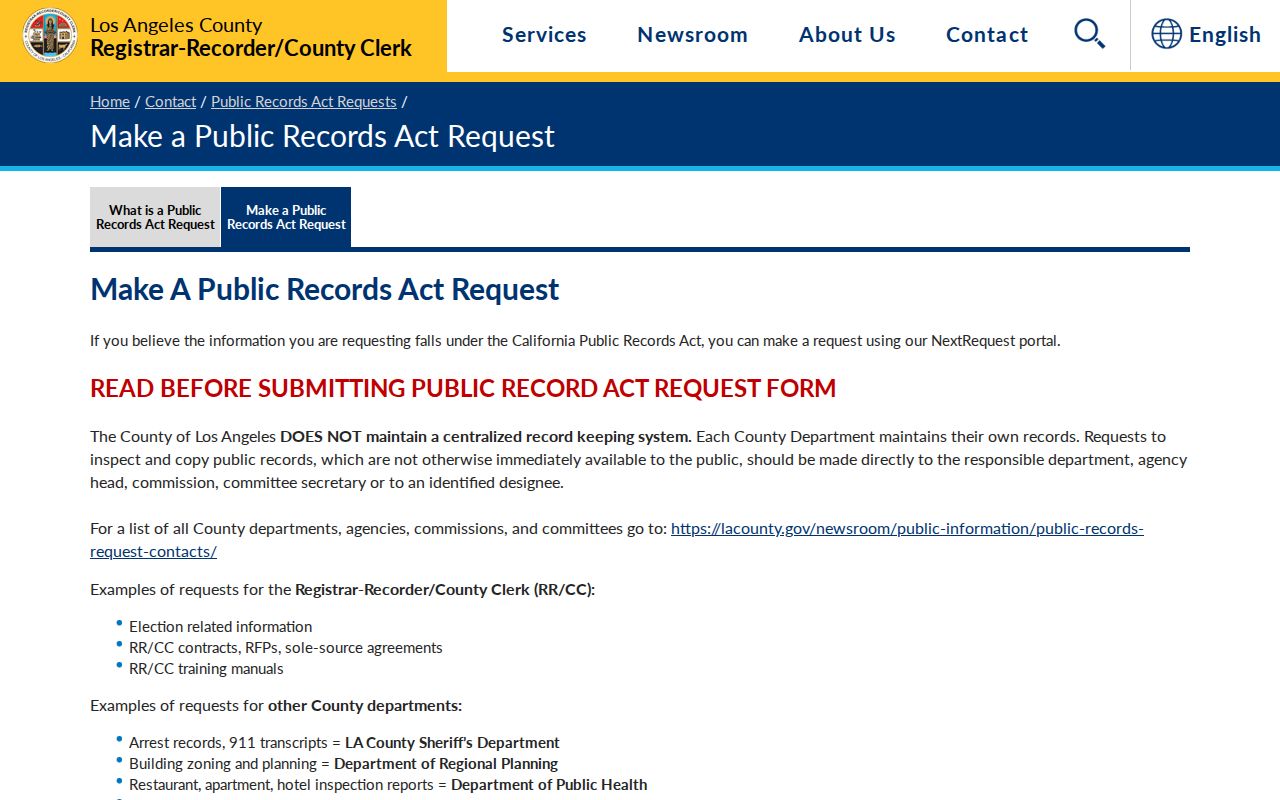
A narrow request should name the record type, address or document number, and date range. It asks for an existing record rather than asking an office to invent a household history.
Culver City Legal Descriptions and Annexations
A house can keep its land identity while its postal or municipal context changes. Culver City was planned in 1913 and incorporated on September 17, 1917. Later annexations created city lines that do not match every 90230, 90232, or 90066 mailing line. Use the official Culver City map collection and the city property information map to check jurisdiction before routing a deed, permit, or address request.
Carry the AIN, tract or lot clue, and legal description across each era. A directory may say Palms or Los Angeles while a deed uses a formal parcel description. The same discipline helps with older maps and Sanborn research, where the exact Culver City sheet years were not verified. Do not use assessment geometry to settle a boundary dispute; it is an assessment aid, not a survey.
Past Culver City Households: Directories and Obituaries
After the deed and directory trail, an obituary or probate file can connect a past household to an heir, spouse, or estate. Los Angeles Superior Court, not RR/CC, holds probate case material and wills filed in those cases. Newspapers and cemetery memorials can supply a date or relationship clue, but they are corroboration rather than certified vital proof. No complete Culver City obituary index or all-year Sanborn catalog was located, so a reference librarian or court archive request may be needed.
Use a final result as a dated record statement: “listed at this address,” “named in this deed,” “appears in this census household,” or “connected through probate.” That wording protects the distinction between previous residents, past owners, subscribers, and court parties.
Lawful personal use. Culver City house-history research is appropriate for genealogy, estate work, civic study, and personal curiosity. Do not use records about past or current people to stalk, harass, intimidate, impersonate, or harm anyone.