
How to Find Culver City Residents
Culver City is an incorporated city within Los Angeles County, so the first task is routing. City Hall keeps permits, certificates of occupancy, code and fire violations, business-license material, agendas, minutes, and other municipal records. The Los Angeles County Assessor and Registrar-Recorder/County Clerk hold parcel and recorded-document evidence. Los Angeles Superior Court handles civil, family, probate, and other trial-court case access. Birth, death, and marriage copies come from the county or California Department of Public Health, depending on the event and the copy requested.
A name alone is weak evidence. An address, date, middle initial, business connection, legal description, or case number makes the trail more useful. Start with the narrowest source that fits the question, then seek agreement from a second independent record. Property ownership does not prove occupancy, a court party may have moved, and an old directory leaves out people who had no listed telephone service.
- Decide whether the goal is a current parcel clue, a voter-status check, a court event, a vital record, or family history.
- Use the Los Angeles County Assessor address or AIN search when an address is known.
- Move to the RR/CC name-and-year index for a deed, lien, or other recorded instrument.
- Use the LA County voter verifier only for the matching personal record and a lawful purpose.
- For older households, compare city directories, census schedules, probate, and local history holdings.
Culver City Records Offices
The right custodian matters more than a broad search phrase. A Culver City residents directory is most useful when its source is labeled before a name or address is copied. Culver City’s City Clerk is the municipal records hub and accepts California Public Records Act requests. The City Clerk’s Office is at 9770 Culver Boulevard, first floor, Culver City, California 90232, with a published phone number of 310-253-5851 and email city.clerk@culvercity.org. Counter hours are published as Monday through Friday, 7:30 a.m. to 5:30 p.m.; City Hall closes on alternating Fridays, so check the calendar before visiting.
Los Angeles County adds the parcel, deed, tax, court, election, and vital-record layers. The RR/CC Real Estate Records headquarters is at 12400 Imperial Highway in Norwalk, California 90650. Its public contact is 800-201-8999, with real-estate and recording options. The county Assessor portal is the free address and AIN starting point. It does not provide an unrestricted owner-name search. That division explains why a Culver City residents directory search may move between a city portal, a county map, a physical county index, and a state form.
Los Angeles County Assessor
Address and ten-digit AIN search
Owner details require an inquiry or office channel.
LA County Voter Services
Personal registration verification
Last name, birthdate, house number, and ZIP are required.
Culver City Parcels Before People
The LA County Assessor portal offers Basic Search, Legal Search, and Map Search. Its combined box accepts a street address or a ten-digit Assessor Identification Number. Parcel detail can show situs, use type, parcel status, tax-rate area, exemption status, building facts, land size, zoning clues, values, and a legal description. The public county page omits the owner and mailing address. If ownership is essential, request a Specific Property inquiry using the complete address or AIN through an Assessor office or contact channel.
The physical parcel address is the situs. The mailing address is where tax correspondence goes. They may differ because a tax bill can go to another property, an office, or a post office box. A different mailing address can suggest an absentee owner, but it cannot establish who lives at the parcel. A Homeowners’ Exemption is a stronger residence clue because the county requires the owner to own and occupy the dwelling as a principal residence on January 1. Even that evidence is not a household roster.
The County Assessor search shows the address/AIN route that starts a Culver City residents directory inquiry.
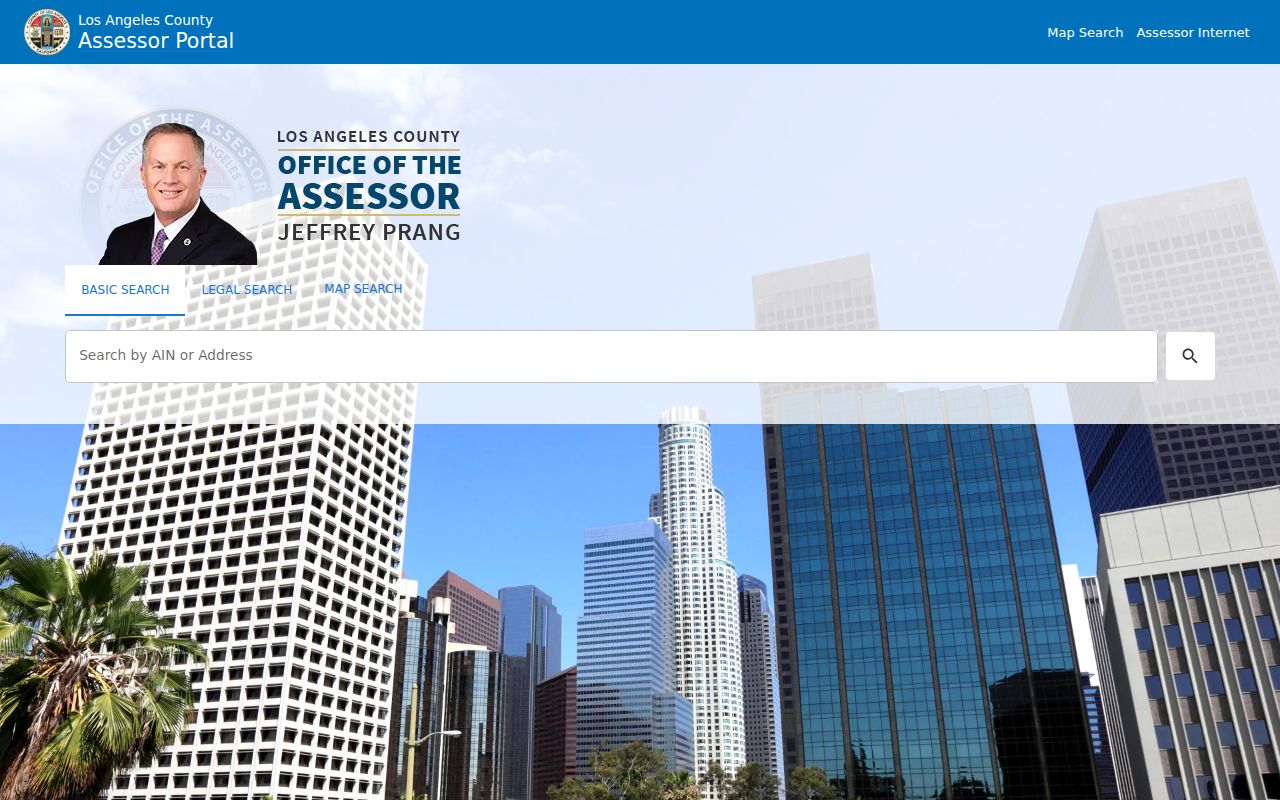
The parcel screen is most useful when its AIN, legal clues, and situs are carried into the next custodian. It is a parcel anchor, not proof of current occupancy.
Record terms. A roll is a tax or assessment list. An index points to a record rather than containing the full record image. A parcel is a mapped land unit, while a legal description identifies that land for recorded instruments.
Los Angeles Deeds by Name and Year
Los Angeles County recorded-document holdings reach 1850 or 1851 through the present, depending on which RR/CC page is read. The county does not offer an unrestricted Internet grantor/grantee index. The physical index is alphabetical by person or entity name and recording year. It cannot be searched by street address or ordered by telephone. A deed copy order is not the same thing as an index search.
Once an AIN and likely owner are known, the searcher can inspect the name/year index at the Norwalk headquarters, then use the document number for a copy request. The 1851 to 1957 material is reviewed on the lower level; 1958 to present is on the second floor. Appointments are required, and the research notes say the booking window is described differently on related pages. The nearer LAX/Courthouse branch at 11701 South La Cienega Boulevard issues copies for 1982 to present, but historical index work remains at Norwalk.
RR/CC’s real-estate records instructions list the fallback channels: in-person appointment, mail, fax, and remote copy ordering. Mail requests need the document title, names, recording year or years, and a delivery address. The published search fee is $0.50 per name per year, with a $1 minimum; current copy and expedited delivery fees should be confirmed before ordering.
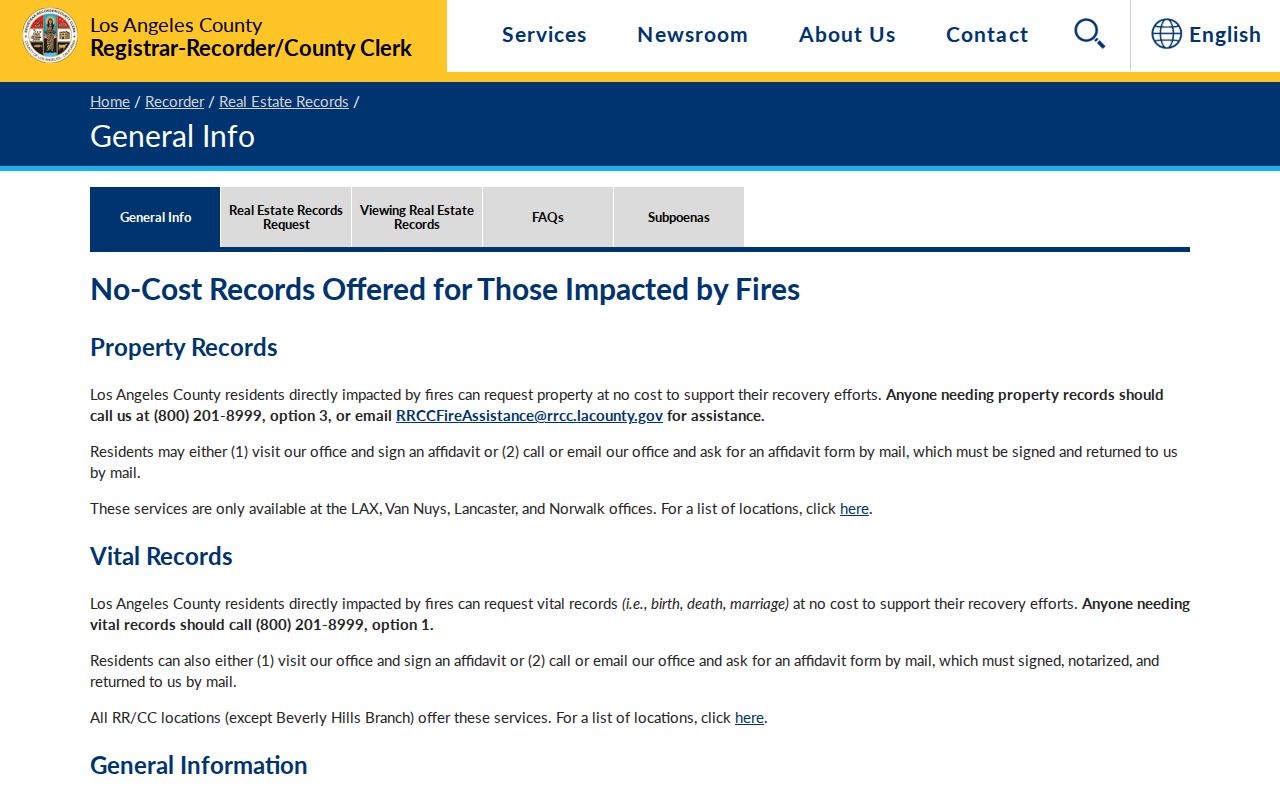
The deed trail names parties to an instrument and supplies a legal description. It does not create a complete list of the people who occupied a Culver City address.
Culver City Voter Status Check
The LA County Voter Registration Verification form is an individual status tool, not a street directory. It requires all four fields: last name, birthdate in month/day/year format, residence house number, and ZIP Code. A match can confirm a person’s registration status and related election information. A failed match may mean a mismatch in one field, not that the person is unregistered.
| Last Name | Alphabetic text, required |
|---|---|
| Birthdate | Date in mm/dd/yyyy format, required |
| House Number | Numeric residence number, required |
| ZIP Code | Numeric ZIP, required |
| Help | 800-815-2666, option 2 |
The county voter-verification form illustrates why the voter roll cannot be treated as an open Culver City residents directory.
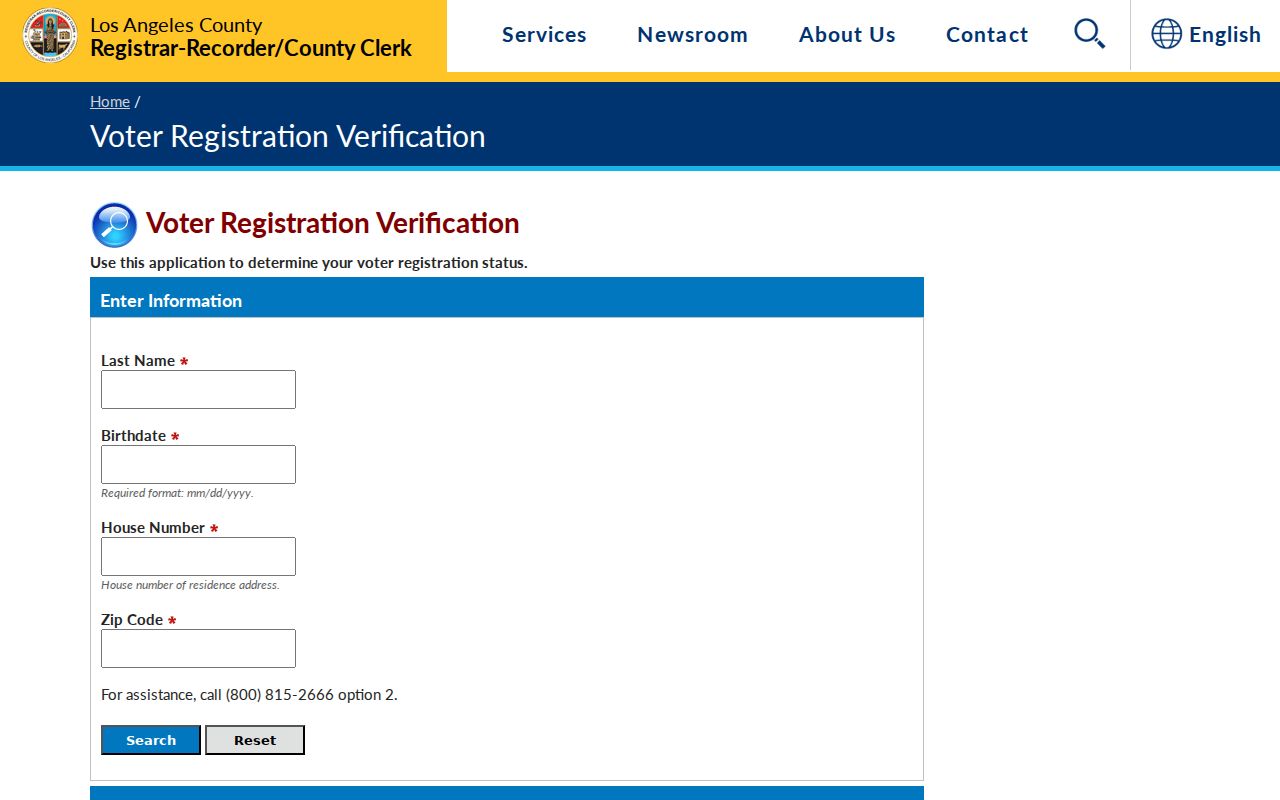
California Elections Code sections 2188 and 2194 and related regulations limit voter-file access to approved purposes. The voter file may include more fields under an approved request, but it excludes driver-license data, Social Security number digits, signatures, protected voters, and confidential Safe at Home addresses.
Current Culver City Resident Directories
Different rolls answer different questions. The coverage table separates a property connection, a registration status, a recorded transaction, and a community contact. It also marks sources that are not public name directories. A current Culver City residents directory search is strongest when the record’s limit stays attached to the result.
| Source | Who or What It Shows | Keeper | Access |
|---|---|---|---|
| Assessor parcel | AIN, situs, use, value, building and exemption clues | LA County Assessor | Free address/AIN portal |
| City parcel GIS | Owner and mailing fields, nearby parcels, sales and zoning | Culver City | Free current ArcGIS layer |
| Voter verifier | One person’s registration status | LA County Registrar | Four matching fields |
| Recorded index | Grantors, grantees, dates and document numbers | LA County RR/CC | Physical name/year index |
| Business or license search | Professional, entity, agent or premises connection | California agencies | Official portals vary |
The city GIS layer is an unusual local exception. Its county-derived parcel service currently exposes owner and mailing fields that the regular Assessor portal suppresses, but that observation can change. A business address, agent address, or tax mailing address remains an association clue, not a residence claim. The full address workflow belongs on the Culver City street directory page, while one-person verification has a separate records path.
Culver City License and Entity Clues
State-level searches can connect a name with a professional license, business entity, or reported unclaimed-property address. The California Department of Consumer Affairs search accepts board or bureau, license type, license number, business name, first name, last name, and registry number. Advanced filters add city, county, status, discipline, and public documents. A license is a regulated professional record, not proof of a home address.
The California license search shows the board and name filters used for a Culver City affiliation.
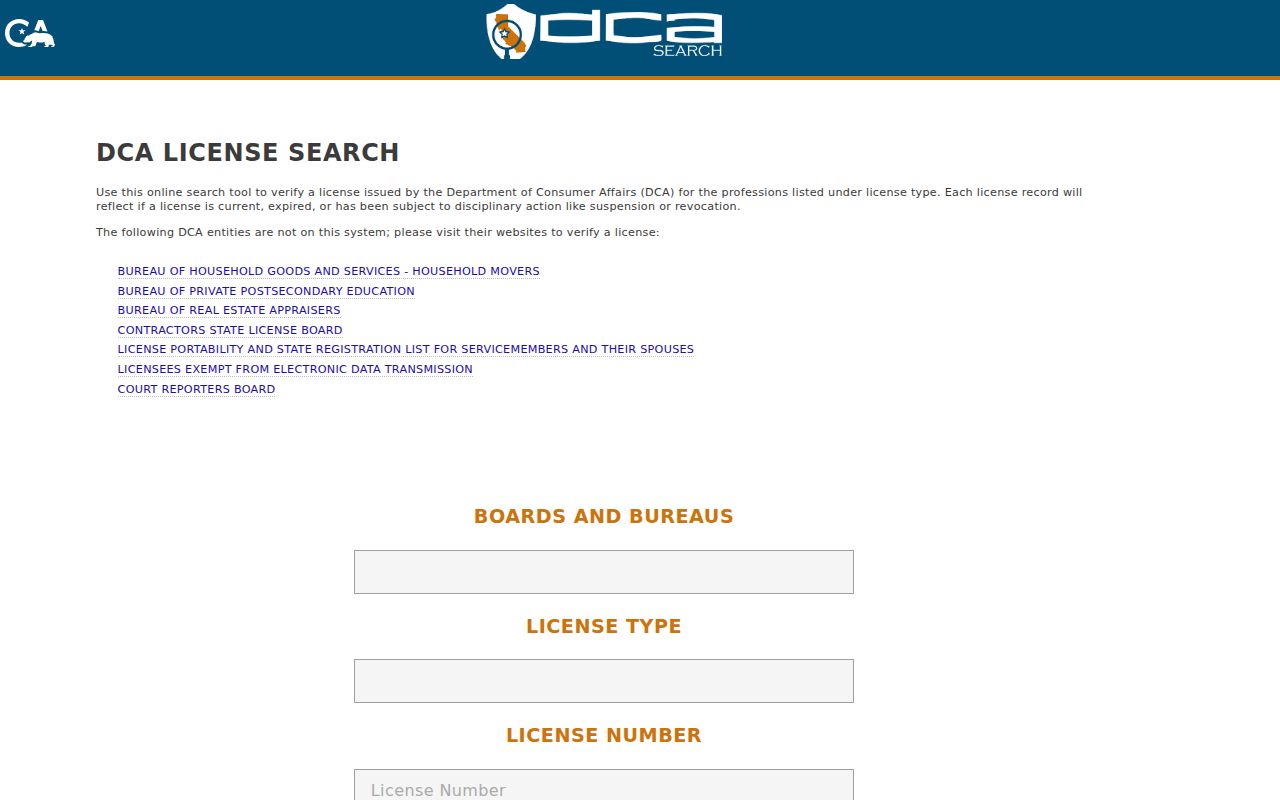
The search interface helps separate a professional identity from a residential claim. Check the issuing board and status before treating a result as current.
California Secretary of State bizfile Online searches corporations, LLCs, limited partnerships, and nonprofits by entity name or number. It can show an agent, principal or mailing address, officers or managers in filed material, and entity status. Basic searching is free, while some filings and certificates need an account or payment.
Entity filings can show a Culver City business connection without showing where an individual lives. The State Controller’s unclaimed-property search is another association clue because it returns a name, reported city, and holder, but it does not establish current residence.
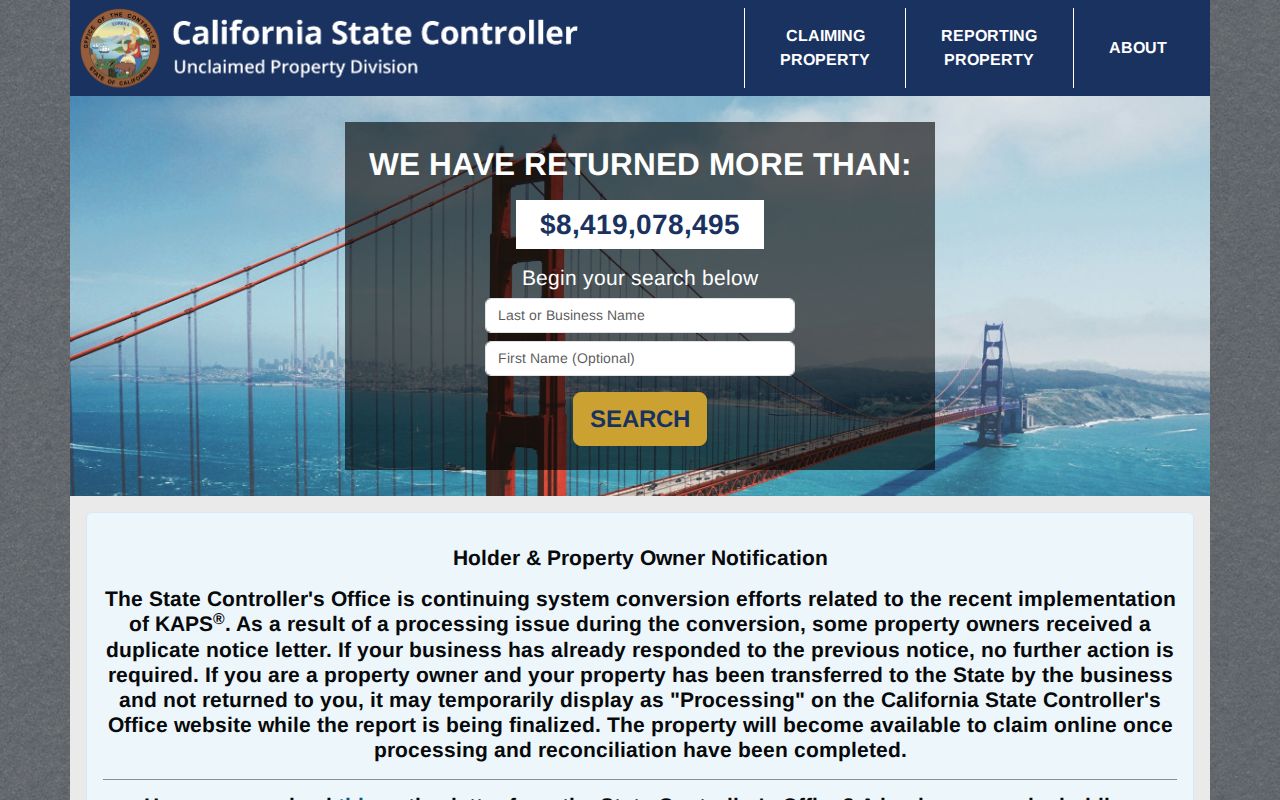
Use these state records to narrow a lawful research question, then return to the originating agency when a material detail needs confirmation.
Culver City Court Case Clues
Ordinary Culver City state trial matters route to the Superior Court of California, County of Los Angeles. Public Access Online Services covers Civil, Small Claims, Family Law, and Probate litigants. Unlimited Civil, Probate, and Family Law records begin in 1983; Limited Civil begins in 1991; Small Claims begins in 1992. Older files go to Los Angeles Superior Court Archives.
The paid party-name result can show a litigant name, case type, filing date, filing location, and the count of available imaged documents. Case-number access is a separate route. Online civil images may be available, while criminal and family-law document images have broader limits. Juvenile, adoption, sealed, and confidential matters are not ordinary public sources. A court result is a dated litigation clue, not a current residence confirmation.
Search the Los Angeles Superior Court civil index when a case or probate question fits the source. Federal matters instead go through PACER and the U.S. District Court for the Central District of California.
Culver City Birth, Death, and Marriage Records
Recent Culver City events usually begin with the Los Angeles County RR/CC because county offices can have the newest records before the state. CDPH maintains statewide vital registrations from July 1905, but it warns that births and deaths from the first three months and marriages from the first six months may not have reached the state yet. County and state routes are record-specific, not interchangeable.
California distinguishes an authorized certified copy from an informational certified copy under Health and Safety Code sections 103525 and 103526. Eligibility and a sworn statement are needed for an authorized copy. An informational copy can be available more broadly, with required redactions. Confidential marriage copies are limited to the spouses or a person authorized by law or court order. Adoption birth records remain sealed under separate procedures.
CDPH Vital Records applications list current 2026 state fees: $31 birth, $26 death, $19 public marriage, and $18 for a dissolution certificate of record. If no record is found, the fee is retained as a search fee and CDPH issues a Certificate of No Public Record. The county is the correct channel for CDPH’s marriage gaps in 2000 and 2002 through 2007.
Culver City CPRA Request Route
The city’s public-records portal accepts a description of the record, date range, address, and department. Contact information is optional, so an anonymous requester must keep the reference number and use the status lookup. Electronic copies are free. The older request page says ordinary paper copies cost $0.15 per page, while the FY2025-26 fee schedule lists photostatic copies at $0.10 per page. Confirm the controlling fee when ordering.
Under the California Public Records Act, Government Code Division 10, the city states that it will make a disclosure determination within 10 days. An unusual-circumstances extension may add up to 14 calendar days after written notice. That is a determination deadline, not always the production date. Requests can be submitted online, by mail, email, or in person. Ask for an existing report or native electronic record rather than asking the city to build a new residents list.
The request should name one record type. City-held examples include permits, certificates of occupancy, code and fire violations, business licenses, agendas, minutes, ordinances, resolutions, site plans, and bid results. Birth, death, and marriage copies go to the RR/CC; property and tax records go to the Assessor; court material goes to Los Angeles Superior Court.
Historical Culver City Resident Directories
The strongest verified local run is the Library of Congress item titled California White Pages and Yellow Pages, Culver City, January 1935 through June 1945. A sampled “Culver City-Palms” page places a surname, given name or initials, an “r” residence mark, house number, street, locality, and exchange telephone number together. Business entries add a name, address, telephone number, and sometimes an advertisement cross-reference. It is useful historical evidence, but subscribers are not the same as every resident. That limitation is central to any historical Culver City residents directory search.
Los Angeles Public Library’s online city and street directory environment spans 1875 to 1987 overall. Its historic city, business, and phone directories can be searched through ResCarta, and reverse directories use “h” or “r” before an address. LAPL Central holds city-directory microfilm and hard-copy collections. The Culver City Historical Society, founded in 1980, collects photographs, maps, newsletters, yearbooks, phone directories, and civic material. The Culver City city directory page follows those collections in detail.
Protected Culver City Records
California’s Safe at Home program gives eligible survivors of domestic violence, stalking, sexual assault, child abduction, elder or dependent-adult abuse, and human trafficking a designated mailing address. It can support confidential voter registration and mail forwarding. State and local agencies generally accept the substitute address unless a lawful need and nondisclosure safeguards are approved. A property bought in a participant’s own name can still be visible through its legal description, so address confidentiality is a system of protections, not invisibility. A Culver City residents directory cannot override those protections.
Voter-file rules also protect confidential and protected registrants. DMV residence information is restricted by state and federal law. Utility-customer details, delivery data, alarm accounts, and private association rosters were not found as open Culver City people registers. A public-record label does not erase a person’s safety or privacy rights.
Lawful personal use. Use records for family history, civic research, reconnecting, estate matters, and personal safety awareness. Do not use a Culver City residents directory search to stalk, harass, intimidate, impersonate, or harm anyone.
Culver City Archives for Reconnection
Local collections are especially useful when a current official roll cannot answer a family or reunion question. The Culver City Historical Society solicits local junior and senior high-school yearbooks and phone directories from any decade. That makes it a strong former-classmate fallback, although the research does not provide a complete catalog or public member roster. Its contact information is P.O. Box 1356, Culver City, California 90232, info@CulverCityHistoricalSociety.org, and 310-253-6941.
Julian Dixon Library began in the Pacific Electric depot in 1915, before Culver City incorporated in 1917, and has occupied its current location since 1970. The County of Los Angeles Library branch at 4975 Overland Avenue connects researchers to digital collections and a Judaica collection. The Californiana Collection in Norwalk adds census schedules from 1850 through 1910, newspapers, early directories, and local histories. These resources can bridge a name or address across periods when a current resident lookup is not appropriate.
A useful archive question identifies the person or household, the likely years, the street or neighborhood, and the kind of source sought. Ask whether the collection contains the yearbook, directory, photograph, or newsletter, and treat any public contact page as a routing point rather than proof of private membership.
Culver City Records Going Digital
The city’s online permitting service launched November 18, 2024 for Building, Planning, Engineering, Fire, and Cannabis services. Full use requires an account. The workflow can connect a unique address to a parcel number and owner field, while separate records exist for Building, Mechanical, Electrical, Plumbing, Demo, and Solar. Completeness review is generally described as taking two to three business days.
Digitization continued through 2024 and 2025. The city approved up to $79,420 for Current Planning file work, amended a building and final-plan contract to an aggregate $342,887.50, and included a separate $75,000 planning scan item in the FY2024-25 budget. A portal miss may therefore reflect an older paper file rather than the absence of a permit. A CPRA request or counter inquiry remains the fallback.
The city’s permit portal announcement is the source for the launch and service scope. These projects are a timely reason to save the record number and date of a search, then verify the live portal before relying on a result.